

BIO Prosciutto di Parma P.D.O.
The Prosciutto di Parma Recipe relies on pork leg, {BIO-Salt, non-iodized (Atlantic Sea Salt)} and {BIO-Extra Virgin Olive Oil} for authentic enjoyment.
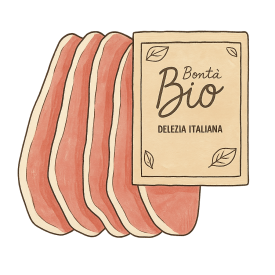
Recommended Organic Ingredients
Recipe
-
BIO-Salt, uniodized (Atlantic Sea Salt)approx. 1.5 kg per 50 kg of meat
-
BIO-Extra Virgin Olive Oilapprox. 200 ml for sealing the cut surfaces
-
Pork leg50 kg (from controlled organic farming, not included in the catalog)
Your Benefits
-
Free Samples
Request free samples! 100% risk-free. Sophisticated, innovative, and simple solutions for your organic recipe. -
In Stock % Prompt Available
Everything in stock, no minimum order quantities. We scale to your requirements – proven successful many times in practice! -
30 Years of Organic Expertise
30 years of experience with organic food – we are your competent organic partner.
Recipe Note
Those who value the highest quality and traditional production will find the perfect basis for Prosciutto di Parma with pork leg, {BIO-Salz, unjodiert (Atlantik Meersalz)} and {BIO-Olivenöl nativ extra}. The ingredients are optimally coordinated for professional applications.

Geschäftsführung / CEO
Preparation
The recipe allows for an authentic production of Prosciutto di Parma with maximum control over quality, maturity, and taste. The clear process structure ensures high reproducibility and excellent suitability for industrial scaling.
Preparation of BIO Prosciutto di Parma g.U. for 20 pieces (each approx. 250 g)
- Prepare pork legs: Carefully trim fresh pork legs, remove excess fat and tendons. Then rinse thoroughly with cold water and pat dry.
- Salting: Rub the legs evenly with BIO-Salt, non-iodized (Atlantic Sea Salt) (approx. 3% of the meat weight, e.g. 1.5 kg salt for 50 kg leg). Layer the legs in stainless steel trays and cover each layer with salt.
- Curing: Store the salted legs at 2–4 °C and 80–85% relative humidity for 18–21 days. During this time, regularly turn the meat and sprinkle with salt again.
- Washing and Drying: After curing, wash off the salt thoroughly, let the legs drain and dry for 1–2 days at 4–6 °C.
- Maturing: Hang the legs in maturing rooms at 15–18 °C and 65–75% relative humidity for at least 12 months. Regularly check and, if necessary, cover the cut surfaces with a mixture of BIO-Extra Virgin Olive Oil and rice flour to prevent drying out.
- Quality Control and Packaging: After maturation is complete, sensorially test each leg (needle test), remove excess fat, portion and package under protective atmosphere.
Note: The entire production must be carried out in compliance with the strictest hygiene standards. For industrial production, HACCP concepts and seamless traceability are required.